•  
CHINA-HEILONGJIANG-JAPANESE GERM WARFARE-NEW EVIDENCE (CN)

CHINA-HEILONGJIANG-JAPANESE GERM WARFARE-NEW EVIDENCE (CN)

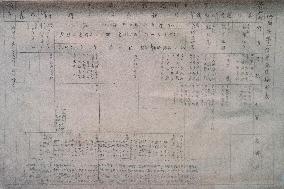
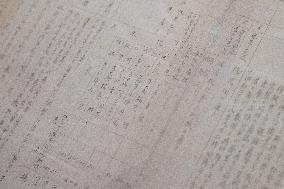
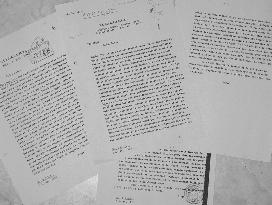
(230807) -- MUDANJIANG, Aug. 7, 2023 (Xinhua) -- This photo taken on Aug. 5, 2023 shows a photocopy of a document from a Japanese army hospital that cooperated with Unit 731, a Japanese germ warfare army during World War II, in Mudanjiang City, northeast China's Heilongjiang Province. An original material from a Japanese army hospital that cooperated with Unit 731, a Japanese germ warfare army during World War II, has gone on public display for the first time in Mudanjiang City, northeast China's Heilongjiang Province. The material on display is composed of 17 documents, with a total of 36 pages, and features the hospital's information from its establishment on July 16, 1941 to Oct. 11, 1945. The hospital could accommodate about 7,200 patients. The material is of great significance for research into the Japanese army hospital, which was implicated in conducting vivisections, according to the Exhibition Hall of Evidences of Crime Committed by Unit 731 of the Japanese Imperial Army, which is located in Ha

  •  
CHINA-HEILONGJIANG-JAPANESE GERM WARFARE-NEW EVIDENCE (CN)

CHINA-HEILONGJIANG-JAPANESE GERM WARFARE-NEW EVIDENCE (CN)

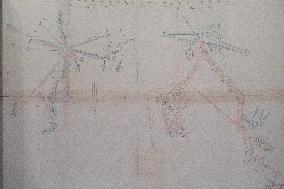
(230807) -- MUDANJIANG, Aug. 7, 2023 (Xinhua) -- This photo taken on Aug. 5, 2023 shows a photocopy of a document from a Japanese army hospital that cooperated with Unit 731, a Japanese germ warfare army during World War II, in Mudanjiang City, northeast China's Heilongjiang Province. An original material from a Japanese army hospital that cooperated with Unit 731, a Japanese germ warfare army during World War II, has gone on public display for the first time in Mudanjiang City, northeast China's Heilongjiang Province. The material on display is composed of 17 documents, with a total of 36 pages, and features the hospital's information from its establishment on July 16, 1941 to Oct. 11, 1945. The hospital could accommodate about 7,200 patients. The material is of great significance for research into the Japanese army hospital, which was implicated in conducting vivisections, according to the Exhibition Hall of Evidences of Crime Committed by Unit 731 of the Japanese Imperial Army, which is located in Ha

  •  
CHINA-HEILONGJIANG-JAPANESE GERM WARFARE-NEW EVIDENCE (CN)

CHINA-HEILONGJIANG-JAPANESE GERM WARFARE-NEW EVIDENCE (CN)

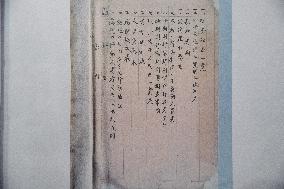
(230807) -- MUDANJIANG, Aug. 7, 2023 (Xinhua) -- This photo taken on Aug. 5, 2023 shows a photocopy of a document from a Japanese army hospital that cooperated with Unit 731, a Japanese germ warfare army during World War II, in Mudanjiang City, northeast China's Heilongjiang Province. An original material from a Japanese army hospital that cooperated with Unit 731, a Japanese germ warfare army during World War II, has gone on public display for the first time in Mudanjiang City, northeast China's Heilongjiang Province. The material on display is composed of 17 documents, with a total of 36 pages, and features the hospital's information from its establishment on July 16, 1941 to Oct. 11, 1945. The hospital could accommodate about 7,200 patients. The material is of great significance for research into the Japanese army hospital, which was implicated in conducting vivisections, according to the Exhibition Hall of Evidences of Crime Committed by Unit 731 of the Japanese Imperial Army, which is located in Ha

  •  
CHINA-HEILONGJIANG-JAPANESE GERM WARFARE-NEW EVIDENCE (CN)

CHINA-HEILONGJIANG-JAPANESE GERM WARFARE-NEW EVIDENCE (CN)

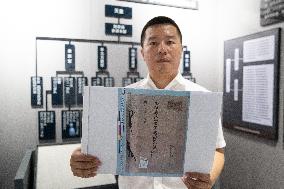
(230807) -- MUDANJIANG, Aug. 7, 2023 (Xinhua) -- A researcher presents a photocopy of a document from a Japanese army hospital that cooperated with Unit 731, a Japanese germ warfare army during World War II, in Mudanjiang City, northeast China's Heilongjiang Province, Aug. 5, 2023. An original material from a Japanese army hospital that cooperated with Unit 731, a Japanese germ warfare army during World War II, has gone on public display for the first time in Mudanjiang City, northeast China's Heilongjiang Province. The material on display is composed of 17 documents, with a total of 36 pages, and features the hospital's information from its establishment on July 16, 1941 to Oct. 11, 1945. The hospital could accommodate about 7,200 patients. The material is of great significance for research into the Japanese army hospital, which was implicated in conducting vivisections, according to the Exhibition Hall of Evidences of Crime Committed by Unit 731 of the Japanese Imperial Army, which is located in Harbi

  •  
CHINA-HEILONGJIANG-JAPANESE GERM WARFARE-NEW EVIDENCE (CN)

CHINA-HEILONGJIANG-JAPANESE GERM WARFARE-NEW EVIDENCE (CN)

(230807) -- MUDANJIANG, Aug. 7, 2023 (Xinhua) -- This photo taken on Aug. 5, 2023 shows a photocopy of a document from a Japanese army hospital that cooperated with Unit 731, a Japanese germ warfare army during World War II, in Mudanjiang City, northeast China's Heilongjiang Province. An original material from a Japanese army hospital that cooperated with Unit 731, a Japanese germ warfare army during World War II, has gone on public display for the first time in Mudanjiang City, northeast China's Heilongjiang Province. The material on display is composed of 17 documents, with a total of 36 pages, and features the hospital's information from its establishment on July 16, 1941 to Oct. 11, 1945. The hospital could accommodate about 7,200 patients. The material is of great significance for research into the Japanese army hospital, which was implicated in conducting vivisections, according to the Exhibition Hall of Evidences of Crime Committed by Unit 731 of the Japanese Imperial Army, which is located in Ha

  •  
Wall clock donated to Nagasaki Atomic Bomb Museum

Wall clock donated to Nagasaki Atomic Bomb Museum

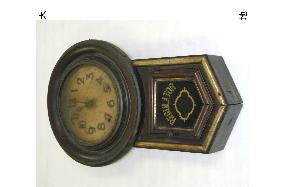
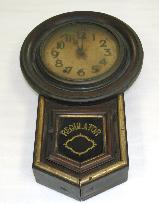
NAGASAKI, Japan - A woman in the city of Nagasaki has donated a wall clock (in photo) that stopped at the moment of the U.S. atomic bombing of Nagasaki at around 11:02 a.m. on Aug. 9, 1945, to the Nagasaki Atomic Bomb Museum, museum officials said on Oct. 12. The clock, which has almost no scratches or cracks, was in her home at the time of the explosion. The home was located some 5 kilometers from the center of the blast.

  •  
MacArthur feared postwar 'economic aggression' by Japan

MacArthur feared postwar 'economic aggression' by Japan

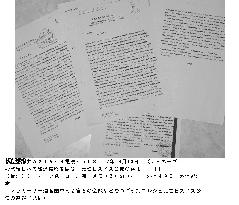
GENEVA, Switzerland - A Swiss document obtained by Kyodo News indicates Gen. Douglas MacArthur worried Japan would wage a ''new economic aggression'' after World War II. MacArthur stressed to a Swiss minister in Tokyo that labor unions had to be developed in Japan to counter the perceived threat. The document, a cable from the Swiss minister to the Swiss Foreign Ministry, is dated Oct. 5, 1945.

  •  
Kiichi Miyazawa

Kiichi Miyazawa

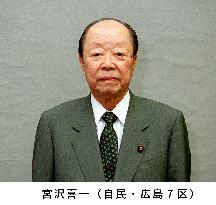
Born Oct. 8, 1919 in Tokyo. Miyazawa is one of the few living politicians to have seen Japan emerge from the ruins after World War II to reach economic superpower status. He joined the Finance Ministry in 1942. After Japan surrendered to the Allied Powers in 1945, Miyazawa became a secretary to then Finance Minister Hayato Ikeda and attended the 1951 Japan-U.S. peace conference in San Francisco to help the minister as an interpreter. Miyazawa served as prime minister between Nov. 5, 1991 and Aug. 9, 1993 after holding various portfolios such as foreign minister, finance minister and chief cabinet secretary.

  •  
Korean memorial in Hiroshima daubed with paint

Korean memorial in Hiroshima daubed with paint

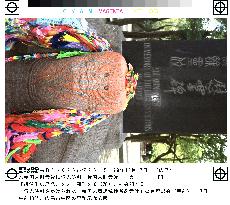
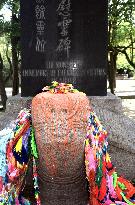
HIROSHIMA, Japan - Part of a stone tower dedicated to Korean victims of the 1945 U.S. atomic bombing of Hiroshima is found splashed with florescent paint on Oct. 17. Passersby strolling along the city's Peace Memorial Park in Naka Ward found the head of the turtle-shaped base of the 5-meter-high, 10-ton tower vandalized with bright orange paint.

  •  
Wall clock donated to Nagasaki Atomic Bomb Museum

Wall clock donated to Nagasaki Atomic Bomb Museum

NAGASAKI, Japan - A woman in the city of Nagasaki has donated a wall clock (in photo) that stopped at the moment of the U.S. atomic bombing of Nagasaki at around 11:02 a.m. on Aug. 9, 1945, to the Nagasaki Atomic Bomb Museum, museum officials said on Oct. 12. The clock, which has almost no scratches or cracks, was in her home at the time of the explosion. The home was located some 5 kilometers from the center of the blast. (Kyodo)

  •  
MacArthur feared postwar 'economic aggression' by Japan

MacArthur feared postwar 'economic aggression' by Japan

GENEVA, Switzerland - A Swiss document obtained by Kyodo News indicates Gen. Douglas MacArthur worried Japan would wage a ''new economic aggression'' after World War II. MacArthur stressed to a Swiss minister in Tokyo that labor unions had to be developed in Japan to counter the perceived threat. The document, a cable from the Swiss minister to the Swiss Foreign Ministry, is dated Oct. 5, 1945.

  •  
Chinese museum demands return of stones used for Japanese tower

Chinese museum demands return of stones used for Japanese tower

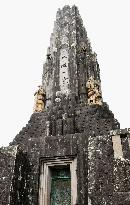
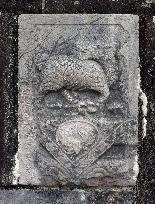
The Peace Tower, built with stones collected in Japan and abroad in 1940 during the second Sino-Japanese War of 1937-1945, stands in the city of Miyazaki, southern Japan, on Oct. 5, 2015. A private anti-Japanese war museum in Nanjing, China, has called on the Miyazaki prefectural government to return three cornerstones it alleges were taken from China. (Kyodo) ==Kyodo

  •  
Chinese museum demands return of stones from Japanese tower

Chinese museum demands return of stones from Japanese tower

Photo taken on Oct. 5, 2015, shows one of three cornerstones used for the Peace Tower in the city of Miyazaki, southern Japan. A private anti-Japanese war museum in Nanjing, China, has asked the Miyazaki prefectural government to return the cornerstones to the country. The tower was built with stones collected in Japan and abroad in 1940 during the second Sino-Japanese War of 1937-1945. (Kyodo) ==Kyodo

  •  
Nobel Peace Prize laureate Mukwege

Nobel Peace Prize laureate Mukwege

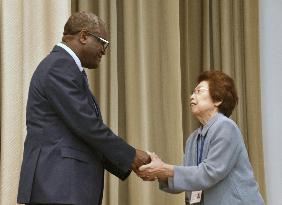
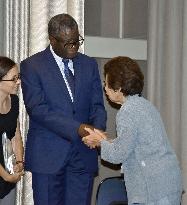
Congolese gynecologist Denis Mukwege (L), a co-winner of the 2018 Nobel Peace Prize, shakes hands with Sadae Kasaoka, a survivor of the 1945 atomic bombing in Hiroshima, in the western Japan city on Oct. 5, 2019. (Kyodo) ==Kyodo

  •  
Nobel Peace Prize laureate Mukwege

Nobel Peace Prize laureate Mukwege

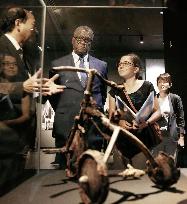
Congolese gynecologist Denis Mukwege (C, L), a co-winner of the 2018 Nobel Peace Prize, visits Hiroshima Peace Memorial Museum -- which displays items related to the 1945 atomic bombing of the western Japan city -- on Oct. 5, 2019. (Kyodo) ==Kyodo

  •  
Nobel Peace Prize laureate Mukwege

Nobel Peace Prize laureate Mukwege

Congolese gynecologist Denis Mukwege (L), a co-winner of the 2018 Nobel Peace Prize, shakes hands with Sadae Kasaoka, a survivor of the 1945 atomic bombing in Hiroshima, in the western Japan city on Oct. 5, 2019. (Kyodo) ==Kyodo

  •  
Korean memorial in Hiroshima daubed with paint

Korean memorial in Hiroshima daubed with paint

HIROSHIMA, Japan - Part of a stone tower dedicated to Korean victims of the 1945 U.S. atomic bombing of Hiroshima is found splashed with florescent paint on Oct. 17. Passersby strolling along the city's Peace Memorial Park in Naka Ward found the head of the turtle-shaped base of the 5-meter-high, 10-ton tower vandalized with bright orange paint.

  • Main
  • Top
  • Editorial
  • Creative
  • About Us
  • About ILG
  • Terms of use
  • Company
  • BEHIND
  • Price List
  • Single Plan
  • Monthly Plan
  • Services
  • Shooting
  • Rights Clearance
  • Support
  • FAQ
  • How To Buy
  • Contact Us
  • Become a Partner

© KYODO NEWS IMAGES INC

All Rights Reserved.

  • Editorial
  • Olympics
  • News
  • Sports
  • Japan
  • Tech
  • Royal
  • Disaster
  • NorthKorea
  • Old Japan
  • SNS
  • Creative
  • Food
  • Japan
  • Landscape
  • Animal
  • Popular
  • #Ukraine
  • #Thailand
  • #coronavirus
  • #N. Korea
  • #Russia
  • #China
  • #Ukraine
  • #Thailand
  • #coronavirus
  • #N. Korea
  • #Russia
  • #China
  • Food
  • Japan
  • Landscape
  • Animal
  • Olympics
  • News
  • Sports
  • Japan
  • Tech
  • Royal
  • Disaster
  • NorthKorea
  • Old Japan
  • SNS